Photos before 1900 in color
Photographs from before 1900, restored and in color. Open one to compare it with the Library of Congress scan and read what the catalog record says.
Or just upload the photo: damage, color and sharpness are handled in one pass.
Choose a photo1860–1869
1890–1899
About these photographs
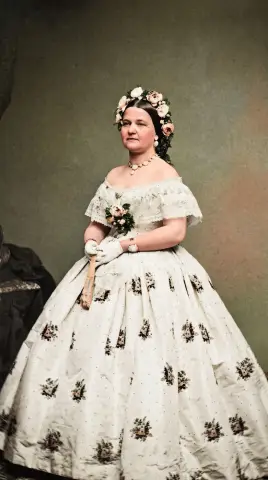
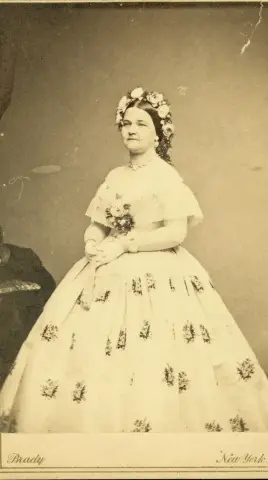
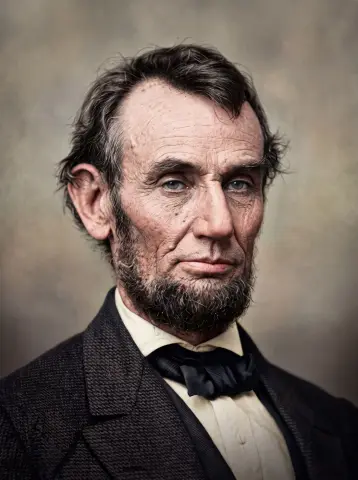
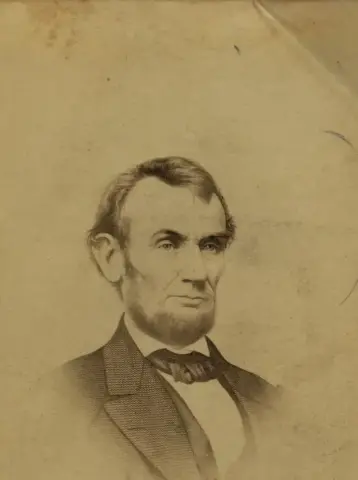
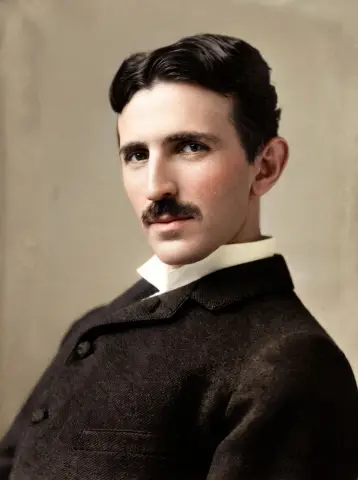
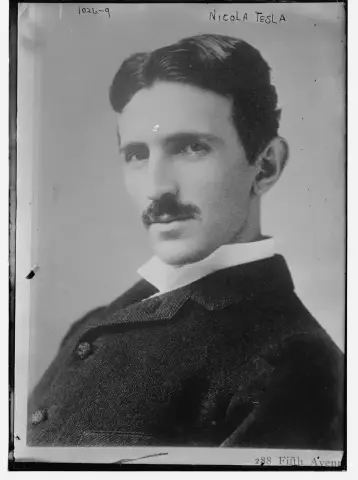
Three photographs are filed here, in order of date: Mary Todd Lincoln, 1861; Abraham Lincoln, an engraving copy, 1865–1880; and Nikola Tesla, c. 1890.
Two are albumen prints on carte de visite mounts in the Prints and Photographs Division and one is a glass negative in the George Grantham Bain Collection. The catalog names the photographer or studio for two of them: Mathew B. Brady (Mary Todd Lincoln) and Napoleon Sarony (Nikola Tesla). For Abraham Lincoln, it names neither a photographer nor a publisher. The picture of Abraham Lincoln is a photograph of an engraving based on Anthony Berger’s photograph of February 9, 1864, not of Abraham Lincoln in person, and the model’s result is a photo-like portrait rather than a restoration of the print; its page explains.
The catalog gives only a range of years or an approximate year for Abraham Lincoln and Nikola Tesla; so do the pages, and a range is filed under its middle year.
Every page names the collection, the digital file and the rights statement, and links the record. The color in each picture is inferred by the model, and the black-and-white “Restored” view was made from the color result.
How photographs were made before 1900
For most of the second half of the 19th century, a photograph on paper was an albumen print: paper coated with egg white carrying light-sensitive silver, printed in contact with a negative that was usually a glass plate. The carte de visite, a small albumen print glued to a card mount and traded like a business card, was most common in the 1860s. Eastman Kodak introduced cellulose nitrate roll film only in 1889.
The picture of Nikola Tesla comes from the Bain collection: the Library of Congress dates most of its images from the 1900s to the mid-1920s, but scattered ones go back as far as the 1860s.
Questions about photos from before 1900
Are there real color photos from before 1900?
Hardly any. A three-filter demonstration in 1861 showed that color could be recorded, but no color process was sold to the public until autochrome plates in 1907. Color in 19th-century portraits was added by hand: some daguerreotypes were tinted, and hand-coloring was used mostly on portraits from the 1850s into the early 1900s. The colors on these pages were inferred by a model from black-and-white originals.
Can I restore a family photo from before 1900 like these?
Yes. Upload a scan or a phone photo of the print. A black-and-white photo comes back in color, with the color inferred by the model, and holding the photograph shows your original so you can compare before deciding whether to keep it.
Sources
- Bain News Service photograph collection — Library of Congress, Prints and Photographs Division
- Photographic Prints — Preservation Self-Assessment Program, University of Illinois Library
- History of Film Types Timeline — U.S. National Park Service
- Awash in Color: The Interior Museum’s Hand-tinted Photographs — U.S. Department of the Interior Museum
- The Hand-Coloring and Retouching of Photographic Prints — American Institute for Conservation, Photographic Materials Group Topics