Repairing a torn photo
What to do with a ripped photograph: how to handle the pieces, why tape makes it worse, and how a torn print is reconstructed digitally from a scan.
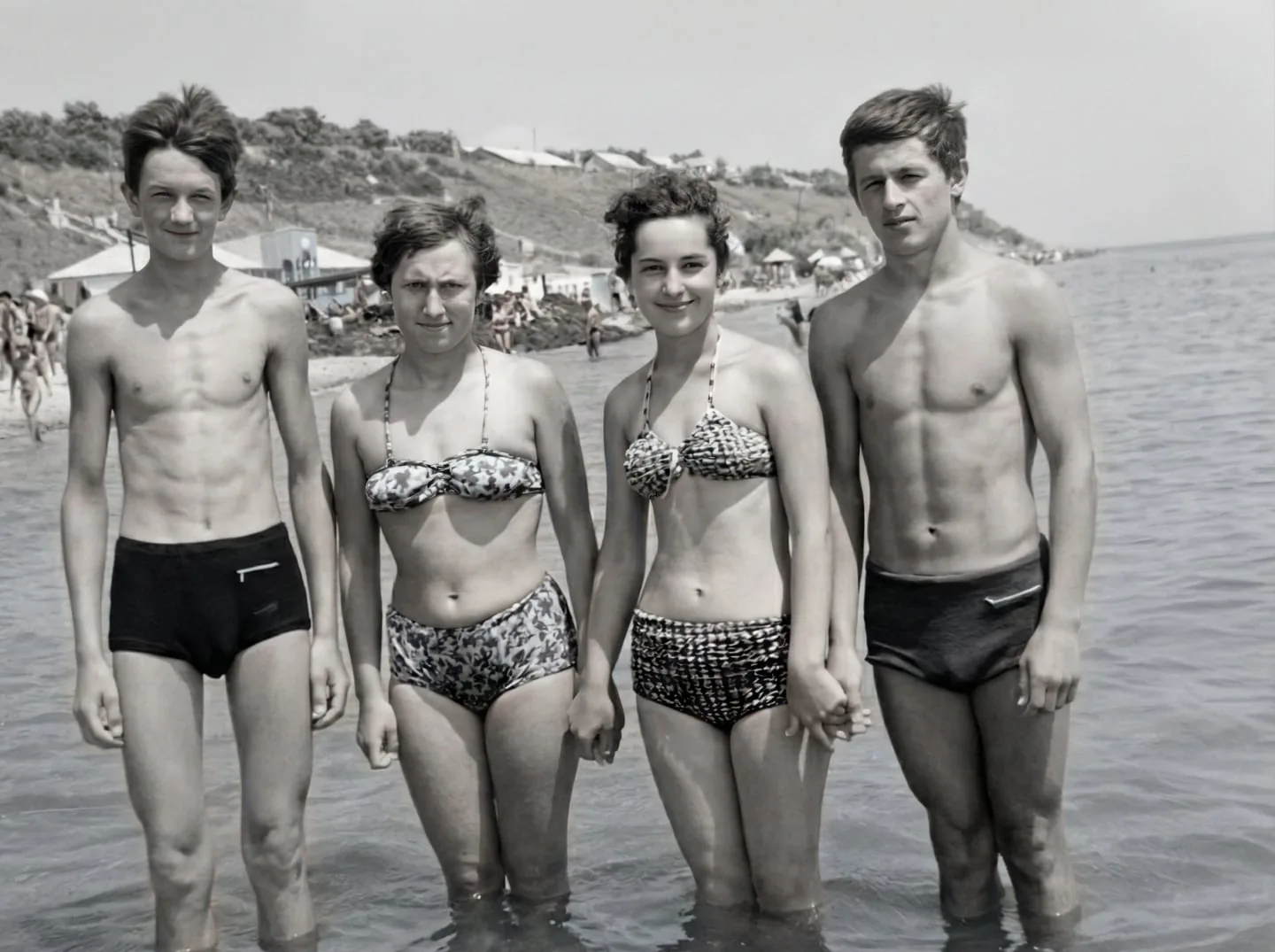
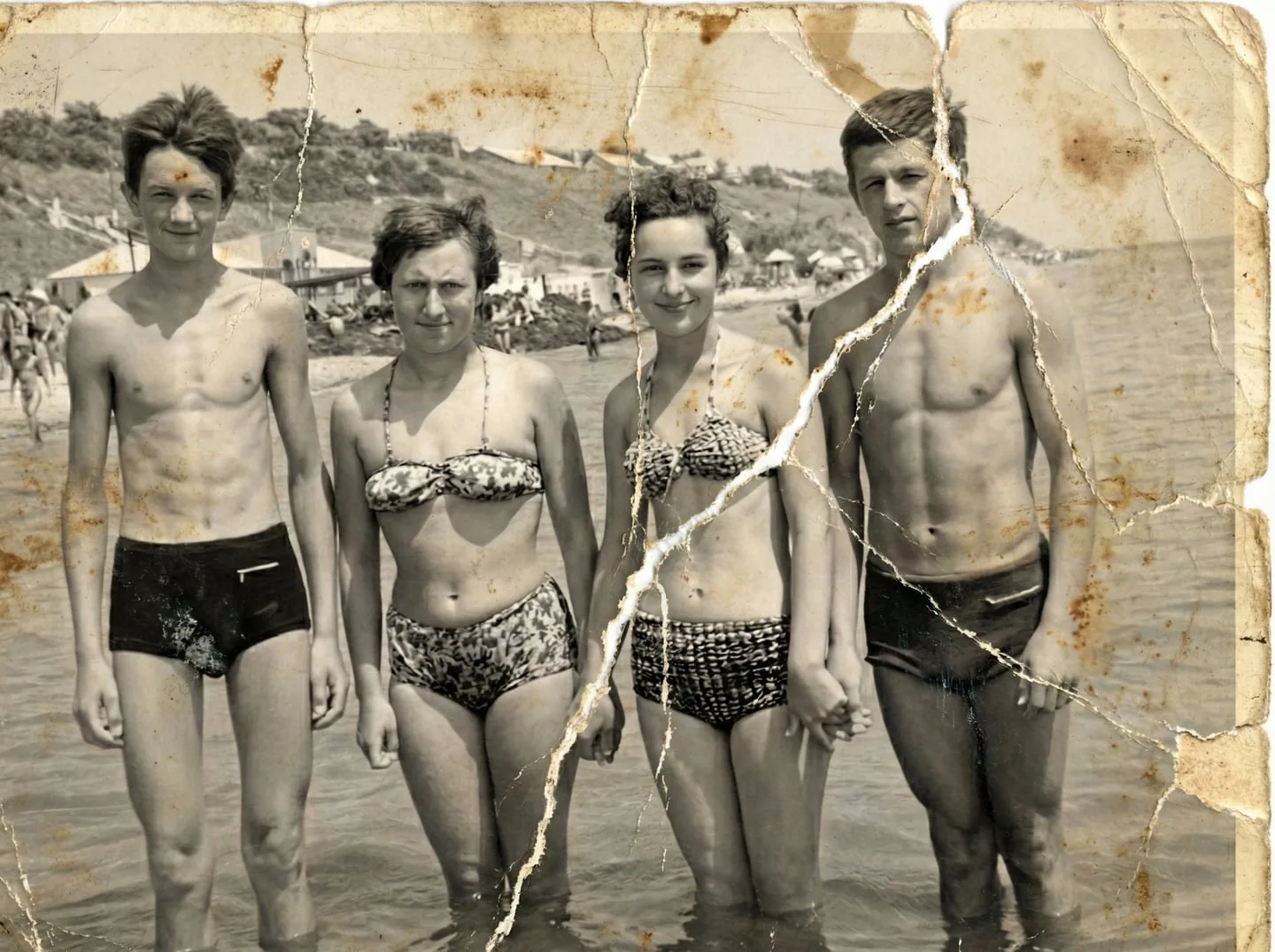
A torn photograph looks like a catastrophe, but to a restorer it is mostly a jigsaw problem: as long as the pieces exist, the image can be reassembled digitally without ever gluing anything. Even a missing corner or a strip lost along the tear line can be reconstructed. The one thing that genuinely makes a tear worse is the roll of tape waiting in your desk drawer.
First rule: no tape, no glue
Pressure-sensitive tape is the classic mistake. Its adhesive soaks into the paper, yellows with age, and leaves a stain that is harder to remove — physically and digitally — than the tear itself. Conservators spend hours undoing old tape repairs. Glue sticks and household adhesives do the same damage faster.
Instead, handle the pieces by their edges, keep them together in one flat paper envelope, and bring them to a scanner. Lay the fragments on the scanner glass assembled like a puzzle, emulsion side down, as close to their true positions as you can manage. One scan of the assembled pieces is the ideal input for digital repair.
If a piece is missing entirely, scan what you have. The missing area is rebuilt from the surrounding image — a lost sky or jacket shoulder reconstructs invisibly. A missing half of a face is the honest limit: it can be plausibly rebuilt, but treat that area as a reconstruction, not a record.
Before you scan a torn photo
- Collect every fragment, including slivers — small pieces often carry edge details
- Never tape, glue or laminate the pieces
- Assemble the pieces face-down on the scanner glass like a puzzle
- Lower the lid gently so the fragments do not shift
- Scan once at high resolution rather than scanning pieces separately
Torn photo questions
The photo was torn years ago and taped back together. Is it hopeless?
No. Scan it as it is, tape and all. The tear line and the tape stain are removed digitally. Do not try to peel old tape off the print — that usually lifts the emulsion with it.
Can a photo torn into many small pieces be restored?
Yes, if you can lay the pieces roughly in place on the scanner. Perfect alignment is not required — small gaps and overlaps along the tear lines are closed during restoration.
What happens to the white tear line across the image?
The tear exposes the paper base, which reads as a white or light line. That line is filled by reconstructing the image across it, so the repair line disappears rather than being painted over.
Make the tear disappear
Scan the assembled pieces and upload the file to see the repaired photo.
Free during early access · 2 restorations a day
Sources
- Care, Handling and Storage of Photographs — Library of Congress