
- Photographer — Not recorded (published by Bain News Service)
- Date and place — c. 1915–1920 (place not recorded)
- Damage — White blotches, scratches, specks, faded tone
- Archive — Library of Congress, LC-DIG-ggbain-21256
- Restoration — Epoha
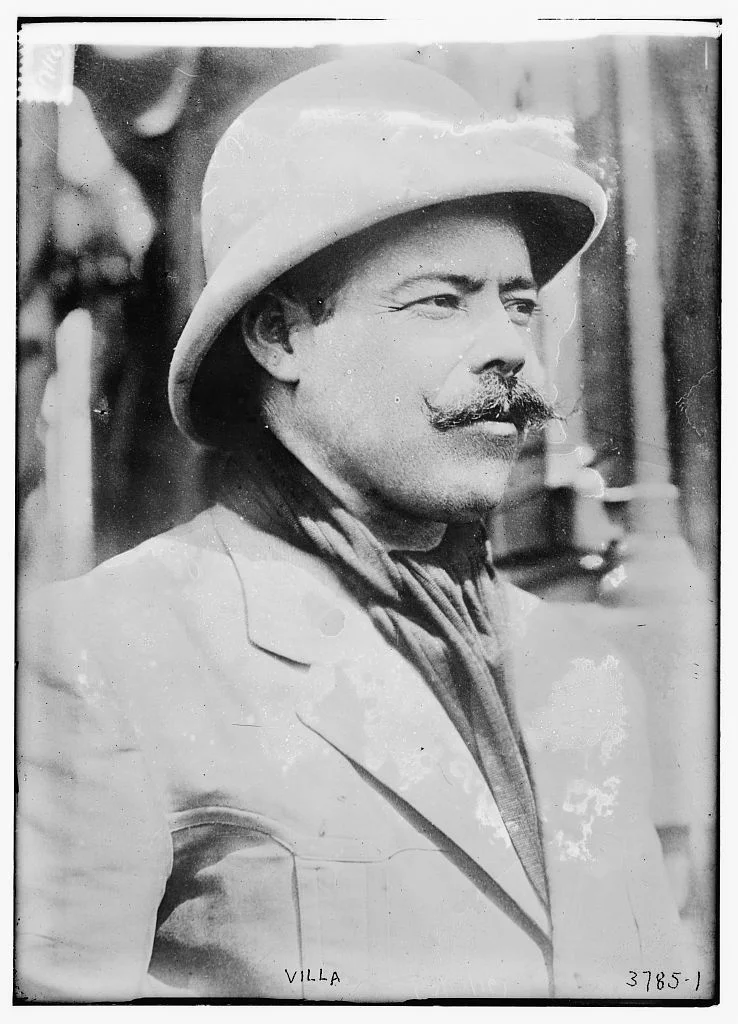
Pancho Villa, c. 1915–1920
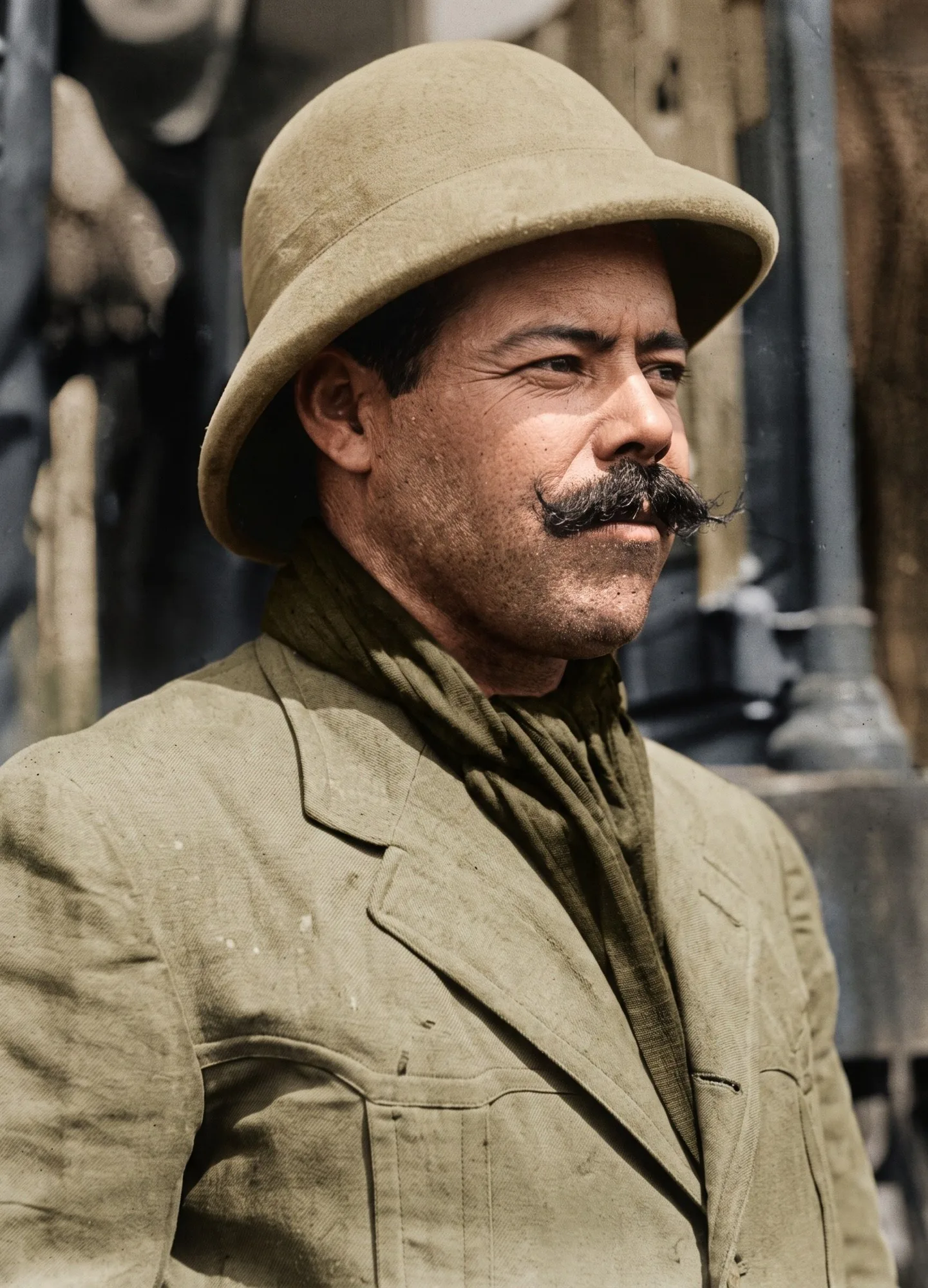
Pancho Villa on a Library of Congress glass negative, c. 1915–1920: white blotches and scratches repaired, the photograph restored and in color.
- Photographer
- Not recorded (published by Bain News Service)
- Date and place
- c. 1915–1920 (place not recorded)
- Damage
- White blotches, scratches, specks, faded tone
- Archive
- Library of Congress, LC-DIG-ggbain-21256
- Restoration
- Epoha
Free during early access · 2 restorations a day
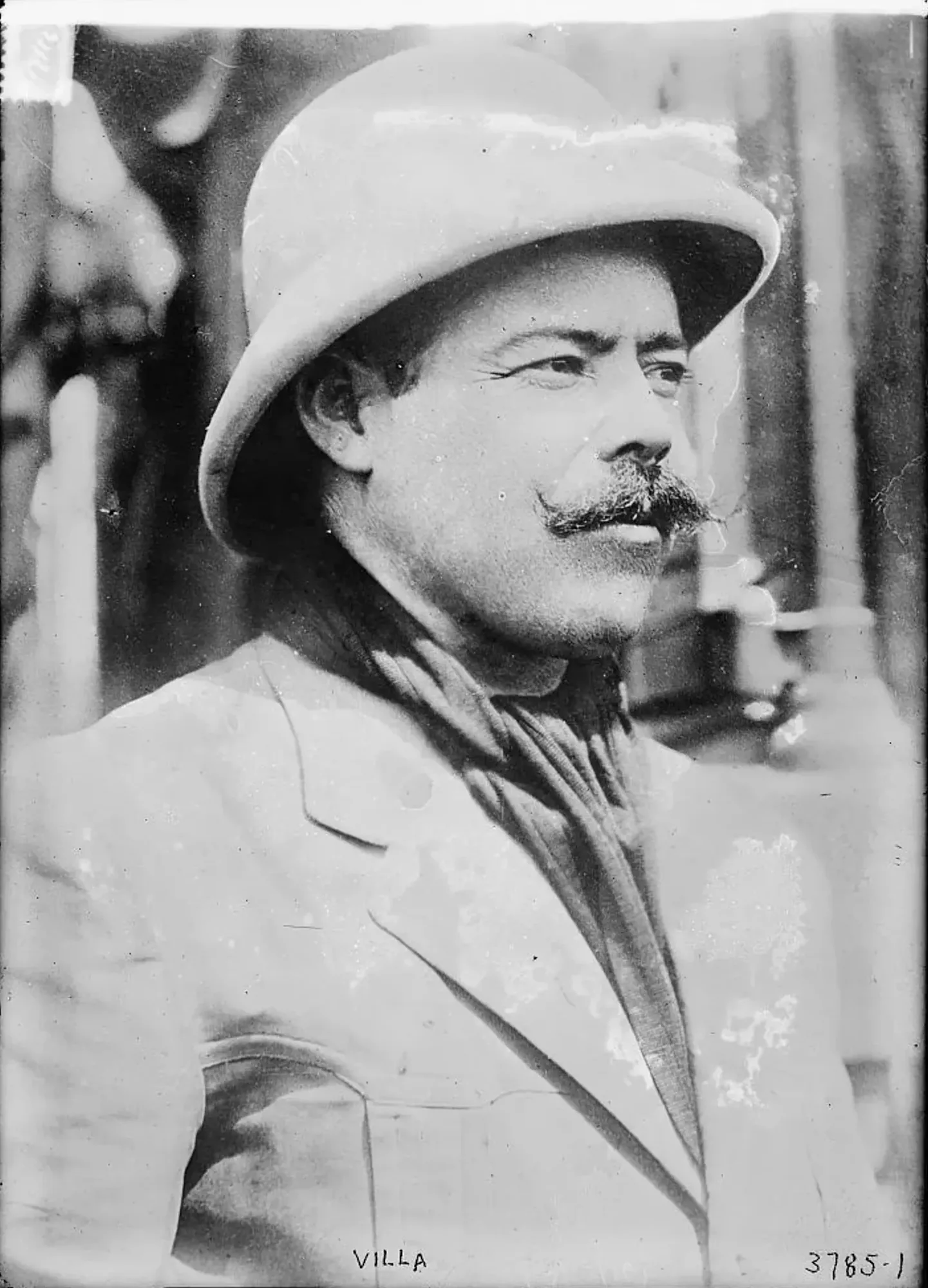
This Pancho Villa photo is the Library of Congress’s digital file of a glass negative from the Bain News Service, cataloged as “Villa” and dated only to between about 1915 and 1920. White, lacy blotches cover the jacket and parts of the background, scratches and specks cross the frame, the tone is flat and faded, and a ragged white strip runs along the top and left edges. What follows is what the record says about the negative, what restoration repaired, and where the color comes from.
What the photograph shows
A man fills the frame, seen from the waist up, in profile and facing right. He wears a pale pith helmet, a scarf at his neck and a light jacket, and he has a heavy mustache. The background is out of focus: vertical posts and the edges of structures, nothing that can be read. At the bottom of the negative the word VILLA is written, with the number 3785-1 beside it.
The Library of Congress catalogs the negative under the title “Villa” and gives its date as “[between ca. 1915 and ca. 1920].” Its note reads: “Photo shows General Francisco ‘Pancho’ Villa (1878-1923) during the Mexican Revolution.” The record names no place and no photographer; it lists the Bain News Service as publisher. The Library’s rights statement begins: “No known restrictions on publication.”
Nothing in the picture says where it was made. The posts and structures behind him are too blurred to identify, and the record gives no location, so this page does not name one.
What happened to the negative
The object is a glass negative, “5 x 7 in. or smaller” in the Library’s words, in its Bain News Service photograph collection (also called the George Grantham Bain Collection). According to the collection note, George Grantham Bain founded the first news photography service in 1898 in New York City. The agency gathered photographs covering events worldwide and distributed them to newspapers, and it also received local pictures from its subscribing newspapers as part of their reimbursement.
The collection includes about 40,000 glass negatives of 4 x 5 and 5 x 7 inches, among other material, and runs from 1860 to 1937, with the bulk between 1910 and 1920. Its subjects include celebrities, parades, sports, immigration, politics, aviation, World War I and the Mexican Revolution. The note adds that most negatives are captioned, and this one is. Nothing in the collection note says who made this particular picture.
The catalog took its title from the caption on the negative: “Title from data provided by the Bain News Service on the negative.” The record does not mention the number 3785-1 written beside the word, so we read nothing into it.
The date is the Library’s estimate. It sits in square brackets, which catalogers use for information supplied rather than read from the item itself. The caption says only “Villa”; the fuller identification, General Francisco ‘Pancho’ Villa (1878-1923), comes from the catalog’s description, which names the Flickr Commons project, 2013, as its source. Beyond that, this page makes no claim about when, where or on what occasion the picture was taken.
The Library describes its digital file, LC-DIG-ggbain-21256, as made from the original negative, and we worked from that file. Neither the negative’s record nor the collection record says how this negative came to the Library.
On the Library’s scan, white, lacy blotches spread over the jacket and parts of the background. Fine scratches and specks cross the frame, the tone is flat and faded with little contrast left in the face or the clothing, and a ragged white strip runs along the top edge and part of the left. The record does not say what caused any of this, and we do not guess. Our guides to scratched photos and to old negatives cover these kinds of damage.
What was repaired, and where the color comes from
The white blotches, the scratches and the specks are gone, and so is the white strip along the top and left edges. Contrast and detail are back in the face and the clothing, and the photograph comes back in color. The caption and the number written on the negative do not appear in the result, because only the photograph itself comes back; keep your own scan whole, since writing at the edge of an original stays with the original.
The restoration was generated with Gemini nano-banana 2.1 through our lab — a different image model from the one behind the restoration tool on this site — using the same analysis and instructions as that tool. We made three runs and show the one that kept his face closest to the negative, judged by eye and by our face-similarity measurement. The other two drifted further from his features. The result is clearer than the scan, so hold the photograph at the top of the page to see the scan and compare the face yourself.
The photograph was black and white, so its color cannot be recovered from it: the model inferred it. The helmet and jacket came back in khaki tones and the scarf in olive. Treat them as a plausible guess, not as a record of what he wore.
Questions about this Pancho Villa photo in color
Is this a real photo of Pancho Villa?
The photograph is real. It is a glass negative in the Library of Congress’s Bain News Service collection, captioned “Villa” on the negative itself, and the catalog’s note says it shows General Francisco ‘Pancho’ Villa (1878-1923); the note credits the Flickr Commons project, 2013, as its source. The restored and colorized versions on this page are our work from the Library’s scan, and the original is what you see while you hold the photograph at the top of the page.
Is the color in this Pancho Villa photo real?
No. The negative is black and white and records light and shadow, not hue, so nothing in it says what color the helmet, the jacket or the scarf was, or his skin and eyes. The model inferred khaki for the helmet and jacket and olive for the scarf. Treat the color as a plausible guess.
When was this Pancho Villa photo taken?
The Library dates it only to a range: “[between ca. 1915 and ca. 1920].” The square brackets mark a date supplied by the cataloger. The record gives no place.
Who took this photo of Pancho Villa?
The record does not say. It lists the Bain News Service as publisher and names no photographer. The collection note says the agency, founded in 1898 in New York City, distributed photographs to newspapers and also received local pictures from its subscribing newspapers.
Where is the original Pancho Villa negative?
In the Library of Congress, in the Bain News Service photograph collection (LCCN 2014701194; digital file LC-DIG-ggbain-21256). The catalog record, linked at the top of this page, describes the digital file as made from the original negative.
Sources
- Villa — Library of Congress, George Grantham Bain Collection
- Bain News Service photograph collection — Library of Congress, Prints and Photographs Division
A family print with white blotches, specks or stains?
Upload a scan of your own. When the result is back, hold the restored photo to see your original before you decide whether to keep it.
Free during early access · 2 restorations a day
Used only to restore your photo. How we handle your photo
Left alone on purpose
His pose, with the head turned to the right, the pith helmet, the scarf at his neck and the blurred background of posts and structures are as the negative holds them. We added nothing to the background to put him in a place: the record gives none, so the picture does not claim one.